
How to Score a Whitetail Buck: A Hunter's Reference to Scoring Standards
Written By: Ryan Reading, Fall Obsession Pro Staff
For as long as hunters have been chasing whitetails, antlers have carried a mixture of meaning, memory, and measurement. Many hunters score their bucks just to understand what they harvested, while others hope to enter their deer in the record books. No matter the reason, learning how to measure a whitetail correctly is one of the most valuable skills an outdoorsman can have. Pope and Young handles archery trophies, while Boone and Crockett covers firearm and all legal harvest methods, but both systems use the exact same measurements. Four key elements define the framework of every antler score, and understanding them turns a confusing sheet of numbers into something any hunter can read.
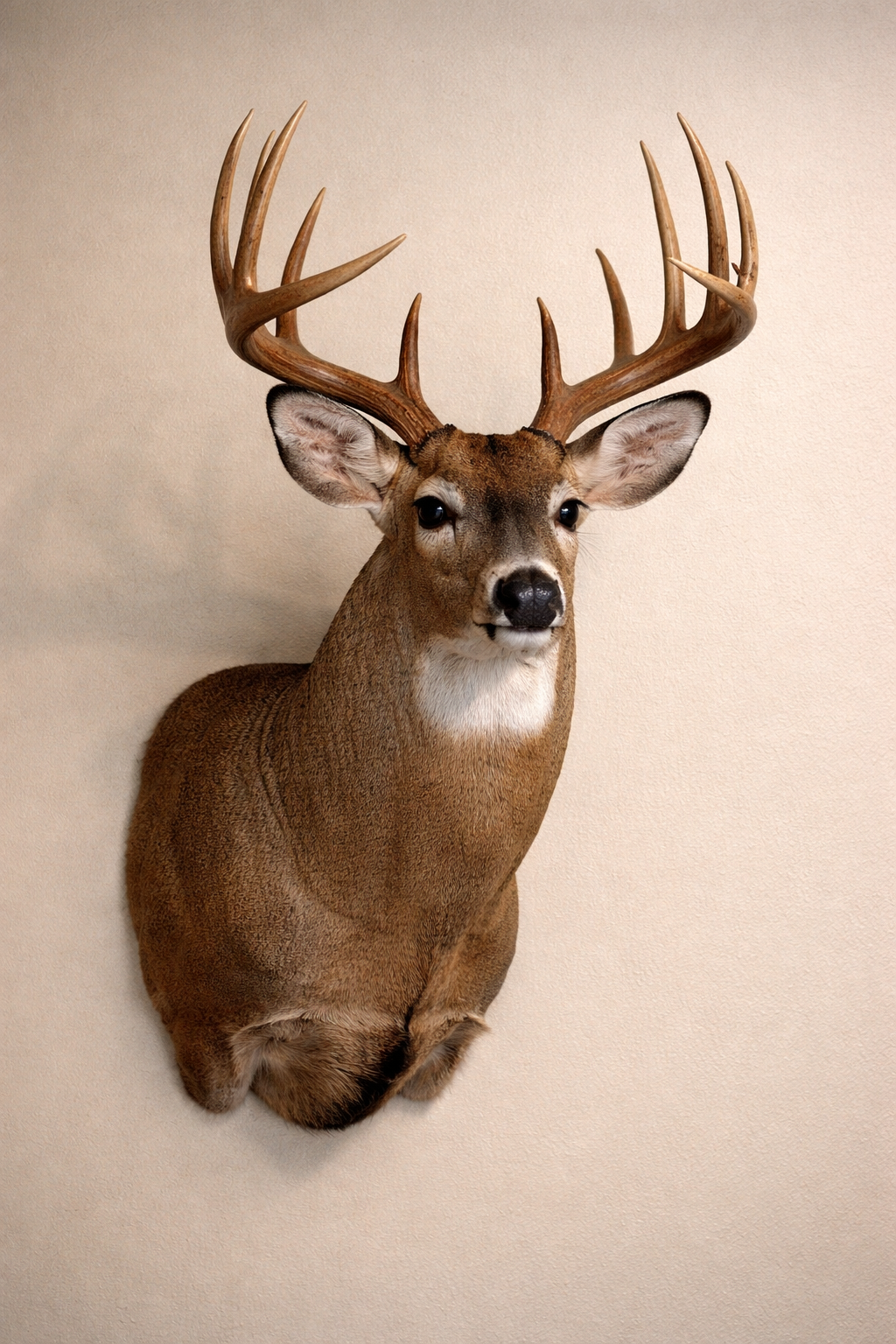
The first element is the main beam length. Each antler has one main beam that curves outward from the burr at the base and then sweeps forward toward the tip. The measurement follows the outside curve of that beam from the burr to the very end. This often accounts for a large portion of a mature buck’s score.
The second element is the tine length. These upright points are measured from the top of the main beam to the tip of each tine. A point must be at least one inch long to be counted, and on a typical rack they progress in order starting with the brow tine as the G1, then the G2, G3, and so on. Long, even tines are one of the first things hunters notice, and for good reason, because they add a significant number of inches to a rack.
The third element is mass, sometimes the most misunderstood part of a score sheet. Mass is recorded by taking four separate circumference measurements along each antler. These readings fall between the burr and the tines in sequence and are labeled H1 through H4. Thick, heavy antlers add more inches here than many hunters realize, and on a mature deer the mass measurements can contribute more than twenty inches per side. The final physical measurement is the inside spread. This is taken from the widest point inside the main beams. Spread is only recorded once because it represents width rather than structure.
When these measurements are added together they create the gross score. Gross score represents every inch the buck grew, the fullest expression of the antler’s size without deductions. Many hunters today talk in gross inches because it reflects the deer’s potential and shows the entire antler as it grew.
Net score is different. Net score is used for official record-book entry and removes side to side differences and abnormal points on a typical rack. If one G2 is an inch longer than the other, the difference is deducted. If a rack is not symmetrical, the mismatched inches are removed. Abnormal points are also deducted on a typical frame. These deductions create the net typical score that record books use. In other words, gross shows growth, net shows symmetry.
Another important part of scoring is the mandatory drying period. Both Pope and Young and Boone and Crockett require roughly a sixty-day drying time before a rack can be officially scored. This is because antlers collected immediately after harvest still contain moisture and can shrink slightly as they dry. Measuring a rack too soon may create a misleading number. Once the sixty days have passed, the rack is stable and eligible for an official measurement.

One of the best examples of how these numbers work comes from the buck I took this season. When we first put a tape on him, his total measurements added up to approximately one hundred and eighty eight and seven eighths inches. If we added the outside spread as well, it would add another 23.3 inches. That would settle around 212 plus inches. That would be the full green gross score, counting everything he grew. However, the Pope and Young chart does not include sections A, B, and C, D. When those deductions were finally applied, they subtracted and after the math, the buck’s score would land near one hundred and sixty four inches net. That is the reality of scoring, a lesson that every hunter eventually learns. The buck may grow nearly two hundred inches, but the record system values balance and symmetry. Some hunters prefer the gross score because it honors everything the deer grew. Others prefer the net score because it fits within the traditional record-book system. Both have their place, and both tell a different part of the story.
Understanding how a buck is measured gives every hunter an honest reference. It brings clarity to the conversations, adds perspective to what different deer truly carry on their heads, and ensures that when hunters talk about a one hundred and fifty plus class buck, everyone knows exactly what that means. But perhaps more important than the number is the connection it represents. Scoring a deer forces you to slow down, study every line of the antler, and appreciate what the land produced. Whether your buck scores one hundred inches or two hundred, learning to measure him the right way adds another layer to the hunt and another page to your own personal record book.
In reality, its about the hunt, the time, the respect, and the ability to succeed at what we set out to accomplish. We pay homage to these animals. In a way, there is a sense of gratitude towards our harvests. Pride if you will but don’t let chasing bone ruin the fun and memories of the hunt. These are the things that will last forever. It’s the pursuit and the aspect of never knowing what you may see or connect with during that next hunt . Stay humble, listen to nature, and most importantly have fun and make memories and no matter what animal you harvest, it will always be the greatest.