
The End of Lost Game: Changing Bowhunting Recovery
Written by: Ryan Reading, Fall Obsession Pro Staff
Every bowhunter has experienced that moment. The arrow hits exactly where you aimed. You hear the impact, see the deer mule kick, and watch it crash through the timber before disappearing into the brush. Then the woods go quiet. The adrenaline fades and the questions begin.
Was it a double lung or a liver hit?
Will there be blood?
Did the deer run 80 yards… or 800?
For generations hunters have relied on instinct, patience, and the hope of a solid blood trail to recover their game. Sometimes it works perfectly. Other times it turns into hours of grid searching, crawling through thick brush, or worse — losing an animal completely.
The reality is that every season thousands of animals are never recovered. Not because hunters made bad shots, but because the tools for recovery have not evolved with the rest of hunting technology. Trail cameras evolved. Rangefinders evolved. Bows and arrows evolved. Tracking wounded game never really did.
Until now!
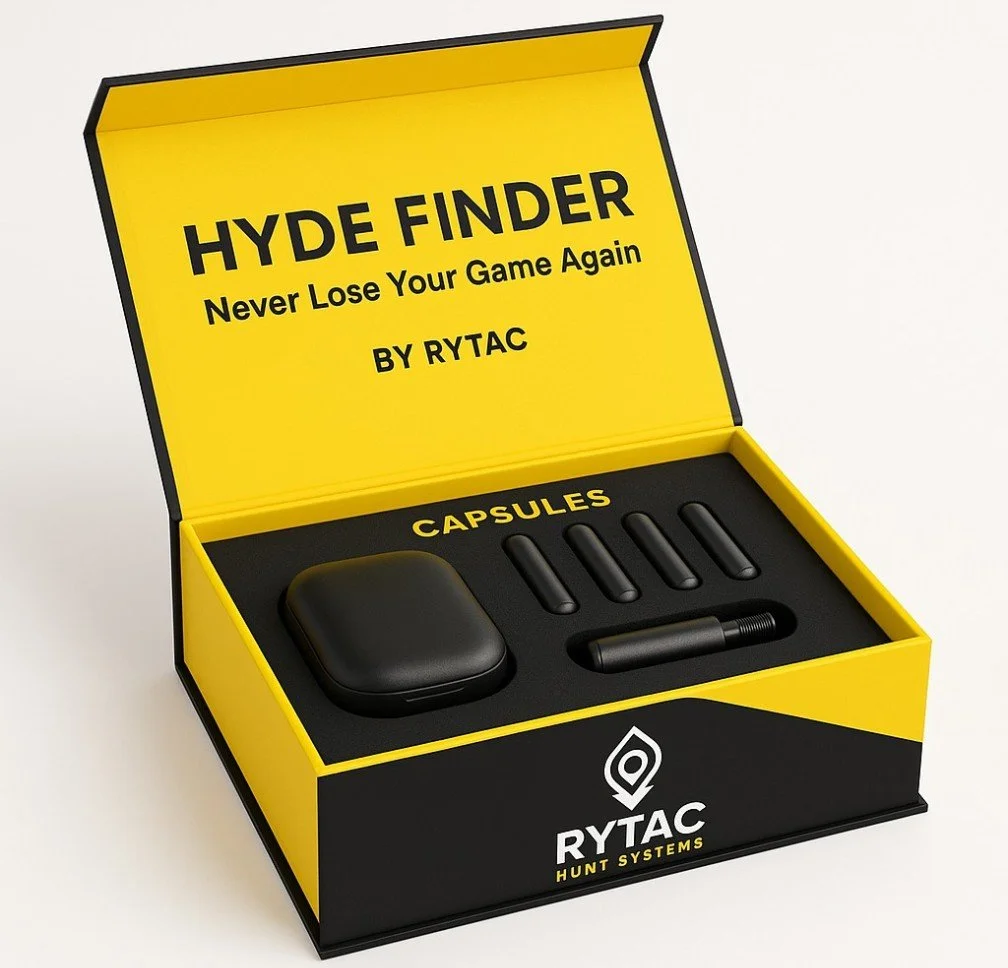
A new technology called HydeFinder, developed by Rytac Hunt Systems, is aiming to change that forever. Instead of guessing where a deer ran after the shot, HydeFinder allows hunters to follow the animal’s exact path using GPS technology built directly into the arrow system itself. The concept is simple. The technology behind it is extraordinary. And the goal is something every ethical hunter can support recovering animals faster and more reliably than ever before.
A New Kind of Arrow System
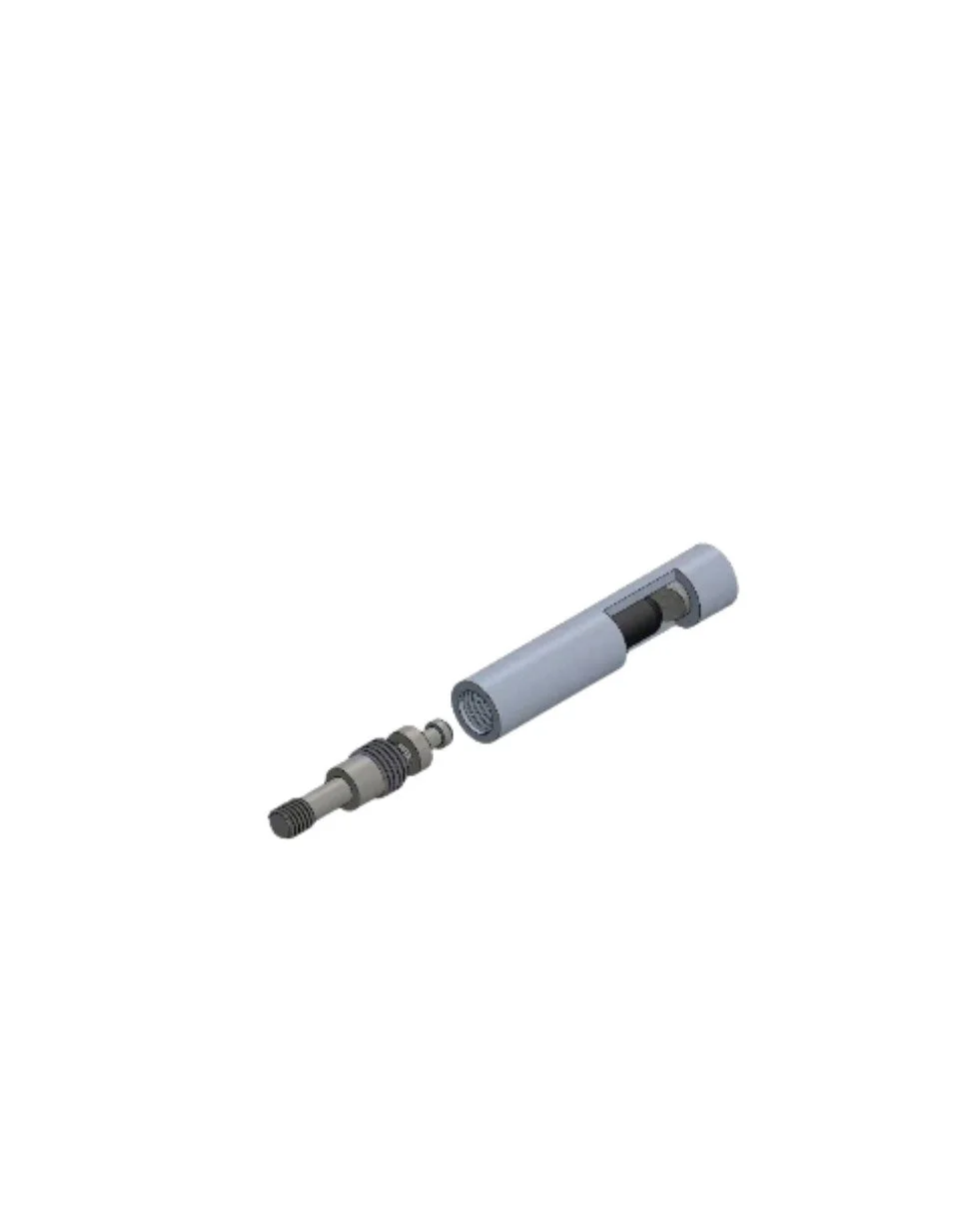
HydeFinder starts with a simple mechanical concept. The system uses a precision aluminum collar that installs directly between your arrow shaft and your broadhead. The process looks like this:
The aluminum HydeFinder collar screws into the front of your arrow shaft.
Your broadhead then screws into the front of the collar.
Inside the collar sits a tiny GPS tracking capsule.
This means the entire HydeFinder system becomes part of the arrow assembly itself.
When the arrow is fired, it flies exactly like a normal hunting arrow. The collar is lightweight and engineered to maintain proper balance and accuracy during flight . Even giving you more FOC. But the moment the arrow hits its target, something remarkable happens. The system activates.
Inside the capsule is a G-switch impact sensor. When the arrow strikes the animal, the sudden deceleration triggers the capsule’s electronics to wake up instantly the capsule is ejected from the collar into the game. That activation starts a chain reaction of technology designed for one purpose: Finding the animal.
The Technology Inside HydeFinder
The HydeFinder capsule is incredibly small. Roughly 6.5 millimeters in diameter and about 22–25 millimeters long, it weighs approximately 50 grains and entire unit 100 grains. Despite its size, the capsule contains an impressive collection of technology.
Inside the capsule are several key components working together:
A high-sensitivity GNSS GPS module
A LoRa long-range radio transmitter
A low-power microcontroller
A precision accelerometer / G-switch
A rechargeable lithium battery
A temperature sensor for advanced recovery information
Power management electronics and signal filtering components
Once activated by impact, the capsule begins acquiring GPS coordinates and transmitting location data. But instead of using standard cellular communication, HydeFinder relies on something far more efficient for remote environments. It uses LoRa technology.
Why LoRa Technology Matters?
LoRa stands for Long Range Radio. Unlike traditional wireless signals that require cellular towers, LoRa is designed specifically for low-power devices that need to communicate over long distances in remote areas. That makes it ideal for hunting environments where cell service is often nonexistent.
The HydeFinder capsule transmits its GPS position using LoRa radio signals to a handheld Hunter Base Module carried by the hunter. In open terrain the signal can reach 1 to 1.5 miles, and often farther depending on terrain and environmental conditions. That means even if a deer runs deep into timber, thick brush, or across a valley, the hunter can still receive the tracking signal.
Instead of relying on blood trails alone, the hunter now has something much more powerful. Real-time location data, Following the animals path. Once the base module receives the signal, it sends the information to the hunter’s smartphone via Bluetooth.
From there the HydeFinder mobile application displays the animal’s movement directly on a map. The app works on both iOS and Android devices and provides several key features:
Live GPS location of the capsule
Compass direction guiding the hunter to the animal
Mapping of the deer’s travel path after the shot
Last known position of the animal
Battery status of the capsule
Signal strength and tracking history
Instead of wandering the woods hoping to find blood, hunters can now see exactly where the animal traveled after impact.
The HydeFinder mobile app can be found here:
https://play.google.com/store/apps/details?id=com.wb.hyde_finder
More information about the system and product updates are available at:
The Importance of the 72-Hour Window
One of the most important design goals of HydeFinder was battery life. The replaceable capsule is engineered to operate for approximately 72 hours after activation. This window is critical for ethical recovery.
Many experienced hunters know that certain hits, particularly liver or single lung shots require time before tracking. Pushing an animal too early can cause it to run farther, sometimes miles, making recovery far more difficult.
With HydeFinder, the hunter can monitor the animal’s movement without immediately pushing it. If the animal beds down, the hunter can see that. If it moves again, the hunter knows.
The optional temperature sensing capability adds another layer of information. By monitoring body cavity temperature changes, the system may help indicate when the animal has expired. This reduces the chance of bumping a wounded deer before it has time to expire. For ethical hunters, this feature alone could change the way recovery decisions are made.
The Hunter Base Module
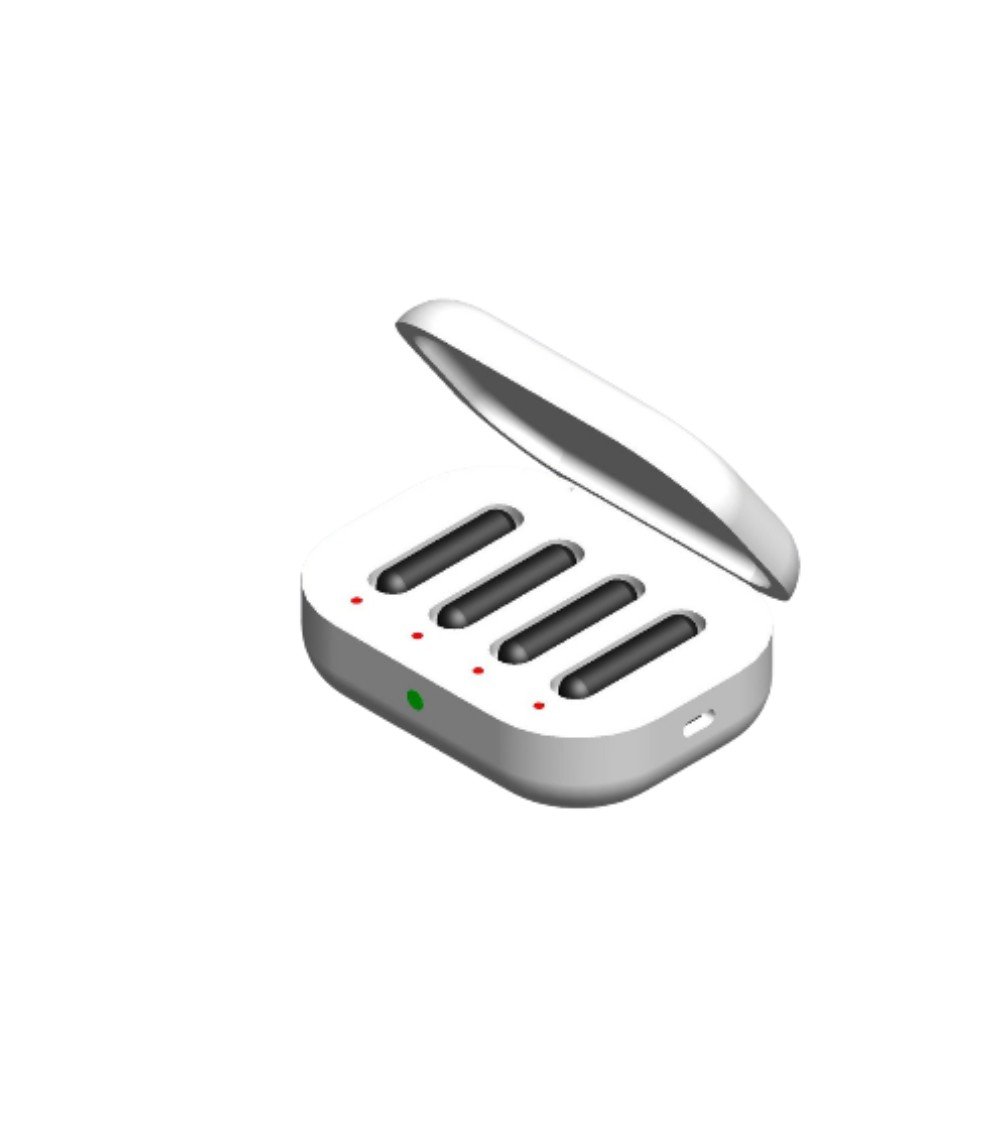
The HydeFinder system also includes a compact handheld device known as the Hunter Base Module. This device acts as the bridge between the capsule and the hunter’s phone. The module performs several important roles:
Receives LoRa signals from active capsules
Relays data to the mobile app via Bluetooth Stores tracking data
Recharges capsules in the field
The charging module can hold up to four capsules at once, allowing hunters to track multiple arrows or share tracking capability with hunting partners. The unit resembles a small case similar in size to wireless earbud charging cases and includes internal battery management systems that allow multiple recharges before needing external power. This makes the system practical for extended hunts or remote backcountry trips. The capsules link via QR code to the app.
Why HydeFinder Was Created
The idea behind HydeFinder came from a simple reality that most hunters have faced. Lost blood trails. Sometimes a deer or animal leaves almost no blood for the first hundred yards. Sometimes rain washes the trail away. Sometimes thick grass or leaf litter hides it entirely. Even low light situations. When that happens, even experienced trackers can lose the trail.
HydeFinder was created to reduce those situations. The system is not designed to replace tracking skills. It is designed to support them. By combining traditional tracking with modern GPS technology, hunters gain a powerful tool that dramatically increases recovery success. That benefits everyone. The hunter recovers their animal. The animal suffers less. And fewer deer are lost in the woods.
Building the Technology
Developing a system like HydeFinder required combining several advanced technologies into a package small enough to fit inside an arrow assembly. Custom printed circuit boards were designed to integrate GPS, LoRa communication, sensors, and power management into a capsule small enough to remain aerodynamically stable during flight.
The aluminum collar system was engineered to maintain arrow balance and structural integrity while also housing the capsule securely until impact. Rytac will explore carbon and magnesium models in the future to alleviate weight. Dozens of components , including capacitors, resistors, regulators, oscillators, and signal filters work together inside the capsule to ensure reliable operation in extreme outdoor conditions. The result is a miniature tracking system built specifically for archery hunting applications.

Looking Toward Launch
The HydeFinder system is currently in its final development stages. The projected timeline includes:
FCC Testing: By June 2026
Manufacturing Start: July 2026
Retail Release: August 2026 hunting season
Like many technology projects, development timelines have been affected by global supply chain challenges and recent overseas conflicts that impacted electronic component availability. Despite those challenges, the Rytac team continues moving toward full production. The goal is clear:
Deliver HydeFinder in time for the 2026 bowhunting season. The Future of Ethical Recovery will change the game .
The hunting world has always been built on tradition, patience, and respect for the animals we pursue. But innovation has always been part of hunting as well. Compound bows, laser rangefinders, trail cameras, and GPS mapping all changed the way hunters operate in the woods.
HydeFinder may just be the next step in that evolution. It does not replace woodsmanship and it wont replace patience. But it gives hunters a new level of certainty after the shot. And when the goal is ethical hunting and successful recovery, that certainty matters.
Because at the end of the day, every hunter wants the same thing. A clean shot and a recovered animal. And the knowledge that the hunt ended the right way. HydeFinder will help make that happen.
To learn more about HydeFinder, presales and upcoming product announcements, visit: www.rytachunt.com