
Trail Cams: The Other Side of the Lens
Written by: Ryan Reading, Fall Obsession Pro Staff
I have enough Tactacam trail cameras in the woods that I should have a pretty good idea what a buck is doing. This particular mature 10 point that I would put somewhere around the 150 inch mark is pretty smart. Lately I have been paying close attention to the way he moves through the particular area. The more pictures I get though, the more I am starting to wonder who is actually studying who.
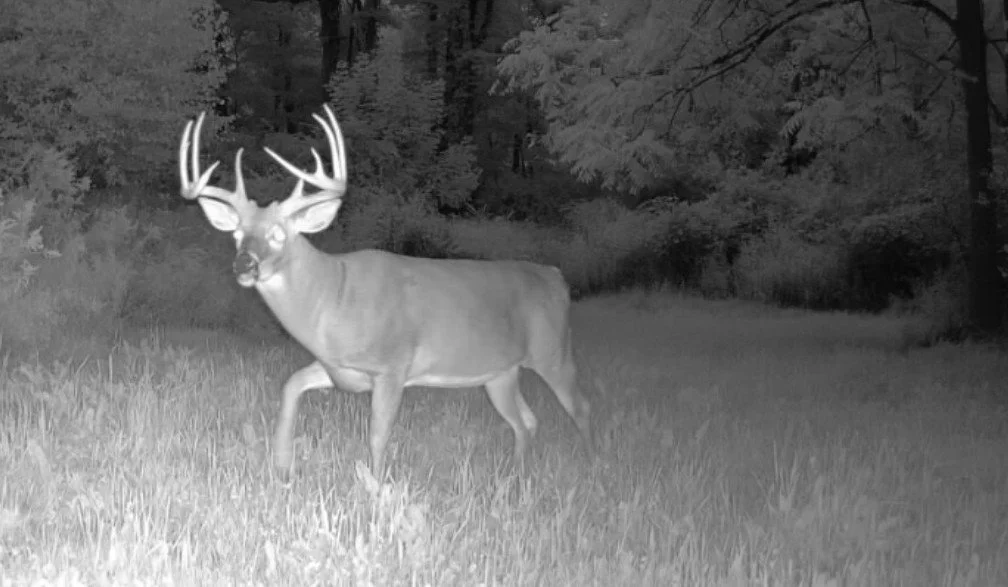
He will come out near one of my cameras and give me exactly what I am looking for. Then another night he seems to avoid that location completely, only to show up on another camera roughly 40 yards away. The way I set my cameras on private ground allows me to view trails at multiple sections to gain a larger understanding of their entire movement pattern.
At first, I did not think much of it. Deer change direction constantly. Wind changes. Other deer move through. Food sources change. Something we never knew happened could cause a buck to take a different trail on any particular night. That is whitetail hunting. But when you start seeing something happen more than once, eventually you stop dismissing it and start paying attention. It's almost like he’s learning the camera locations - maybe the low glow, something? Then proceeding nights it seems like he’s testing certain cameras and the camera reaction to him passing by
That is where I am with this buck right now. I am paying attention, and he has me thinking about something we do not talk about enough as hunters. We spend an incredible amount of time using trail cameras to learn mature bucks, but how much time do we spend thinking about what those bucks might be learning about our cameras?
I am not saying a whitetail understands what a trail camera is. I do not believe a buck walks through the woods thinking there is a cellular camera strapped to that tree sending pictures of him to somebody's phone. He does not need to understand what it does. He only needs to recognize that something changed, remember where that change occurred and decide whether he is comfortable with it.
That is a completely different conversation.
Trail cameras have become our eyes in the woods when we cannot physically be there. We use them to learn which bucks survived, watch antler development, monitor food sources, study travel corridors and see when patterns begin to change. Cellular cameras have taken that even further because we can receive information without walking into the woods every few days. I run a lot of cameras and rely heavily on the information they give me, but the longer I use them, the more I question whether a camera can truly observe the woods without sometimes affecting what it is observing.
We strap a camera to a tree, point it toward a trail and assume everything that happens afterward represents natural deer movement. Most of the time it probably does. But the camera is still something that was not there before. Somebody had to walk in and install it. We touched the tree. We handled the camera. We disturbed the ground around it. We left scent behind. Depending on the camera, there can be infrared illumination when it takes a nighttime picture. There may even be subtle sounds or other changes that we simply do not notice.
A mature buck survives by noticing changes. He does not have to understand those changes. If a tree falls across a trail, he notices it. If something unfamiliar appears where it was not yesterday, he can notice it. If human scent suddenly shows up in a place that has been quiet, he can react to it. Survival does not require him to understand why something happened. It requires him to recognize that something is different and determine whether that difference represents danger.
That is what makes this particular 10 point so interesting to me. I have cameras positioned close enough together that I can see pieces of his movement rather than relying on one camera to tell me the entire story. If I only had the camera he avoided, I might assume he simply was not there that night. Another camera 40 yards away tells me otherwise.
That may be one of the biggest problems with the way we interpret trail camera information. A missing picture does not necessarily mean a missing deer.
When this buck appears on another camera without showing himself where I expected him, I know he moved through that general area somehow. Whether the camera caused him to change his route is something I cannot prove. Maybe he can detect something from the low glow camera. Maybe he recognizes the physical camera itself. Maybe he smells where I stood while installing it. Maybe wind caused him to swing wider. Maybe another deer changed his direction. There are plenty of possibilities, including one we always have to remember. Maybe he is simply being a deer.
Hunters are incredibly good at finding patterns when we want patterns to exist. Get two pictures of a buck at roughly the same time and suddenly we think we know his schedule. Get him on the same wind twice and we start believing we have figured out which wind he prefers. Then we sit there under what we believe are perfect conditions and never see him.
I am not ready to say this buck has figured out my trail cameras. What I am willing to consider is that he may recognize certain locations as being different or potentially unsafe. There is a big difference between those two ideas. He does not have to understand a camera to avoid it. He only has to associate that spot with something he doesn’t like.
When you start looking at cameras that way, some of the things we have all seen become more interesting. Anyone who has run trail cameras long enough has pictures of deer staring directly into them. Sometimes it is probably simple curiosity. Other times a buck seems completely focused on the camera. We have also had deer approach from strange angles or somehow pass through an area without giving us the picture we expected.
We joke that they beat the camera. Maybe sometimes they did, just not for the reason we think.
Maybe something about that location simply caused the deer to move differently. If I convince myself a buck knows exactly what a camera is, I am probably giving him too much credit. If I refuse to believe an experienced deer can recognize something unnatural and adjust to it, I might not be giving him enough.
This buck has also changed the way I think about the pictures I do not get. We put tremendous value on the photograph. There he is. We have the date, time and direction he was traveling. We save that picture and start building a hunting plan around it. But if another camera proves that buck was in the area and a camera that should have captured him did not, there is information in that absence too.
Maybe there is another trail I have overlooked. Maybe terrain causes him to swing wider than I thought. Maybe he is using the wind to approach the area differently. Maybe he is avoiding another deer. Or maybe he is giving a particular camera location more room because something about it makes him uncomfortable. Suddenly those forty yards between two cameras become just as important as the pictures themselves.
It also makes me question how aggressively we place cameras. We find a scrape and put a camera directly over it. We find a heavily used trail and put one five feet away. We find an intersection and immediately want a camera covering it. We want the closest and clearest pictures possible because we want information.
But what if getting the perfect picture sometimes costs us better information?
There are situations where I would rather know a mature buck is using an area naturally than have a close picture of his rack filling my screen. Backing a camera away, changing the angle or positioning it to watch a larger piece of an area might sometimes tell us more. If a particular buck is sensitive to cameras, putting one directly in his face could potentially alter the exact behavior we are trying to understand.
Then there is the part of this equation that may matter more than the camera itself - Us.
We can blame a camera for making a buck uncomfortable, but somebody put it there. Every camera gives us another reason to enter the woods. Even cellular cameras have to be installed, and eventually batteries need attention or something has to be adjusted. Every trip creates disturbance.
We worry endlessly about access to our stands, scent control and touching vegetation, yet sometimes we walk directly into a mature buck's world carrying a camera, trim branches, move vegetation, handle trees and spend several minutes standing there getting everything positioned correctly. Then the buck changes his behavior and we wonder if he saw the infrared glow.
Maybe he noticed everything else.
That is why I think camera discipline needs to become part of hunting discipline. Just because I can put another camera somewhere does not mean I should. Just because another angle might give me better pictures does not mean those pictures are worth another trip into the area. At some point, information has a price.
The older I get and the longer I hunt whitetails, the more I believe mature buck hunting is a game of probabilities rather than absolutes. There are very few things I can say a mature buck will always do. I can study his movement, understand the terrain, watch the wind, monitor food and pay attention to pressure. I can put myself where I believe he is most likely to be. What I cannot do is control the decision he makes when he gets there.
Trail cameras have given us more information about mature bucks than hunters from previous generations could have imagined, but a picture still only shows us a fraction of what happened. We do not know what that buck did fifty yards before the camera or fifty yards after it. We do not know whether he stopped, circled, caught scent or changed direction. Sometimes what the camera does not capture may be every bit as important as what it does.
That is what this 10 point has me reflecting on as the season approaches. I am going to keep watching him, but I am paying closer attention to those nights when he shows up forty yards away from where I expected him. I want to compare wind, time and how recently I have been around those cameras. At the same time, I do not want to ruin the opportunity trying to solve the mystery. I already know he is there.
Maybe he is learning my camera locations. Maybe he can detect the low glow. Maybe he has associated certain spots with my scent or another disturbance. Maybe he is simply being a mature whitetail and I am reading too much into it. I cannot prove any of those things, but I can pay attention to what he is showing me and adjust accordingly. At some point, keeping that buck comfortable is more important than getting another picture of him.
Yet, all these years I thought the advantage of a trail camera was that it allowed me to watch a mature buck without him knowing I was there. This buck has me questioning that assumption. Every picture helps me learn a little more about him, but every encounter he has with one of my cameras may be teaching him something too. Maybe the advantage is not as one sided as we like to think.
We spend all summer looking through the lens trying to figure out a mature buck. This season, I am going to pay a little more attention to what might be happening on the other side of it using their perspective.