
Before October Comes: Interpreting Bear Movement
Written by: Ryan Reading, Fall Obsession Pro Staff
There is something about September that changes the way I look at every trail camera picture. A bear on camera in July is exciting, but there is still a lot of summer left and plenty of time for things to change. Once September gets here, October 1 suddenly doesn’t seem very far away. Stands are hung, cameras are working and I start paying a lot more attention to where bears are showing up, what time they are moving and, more importantly, why they are using a particular area. This year one bear decided to make that job a little more interesting. On the morning of September 4, at about 6:28, he showed up at one of my hang on stands. Instead of simply walking past the camera, he walked over to the tree, stood up, grabbed my hoist rope and started playing with it. A couple of pictures later, he was climbing the tree toward my stand. Bear season here in New York doesn’t open until October 1, so apparently he decided to inspect my setup before I ever got the chance to hunt from it.
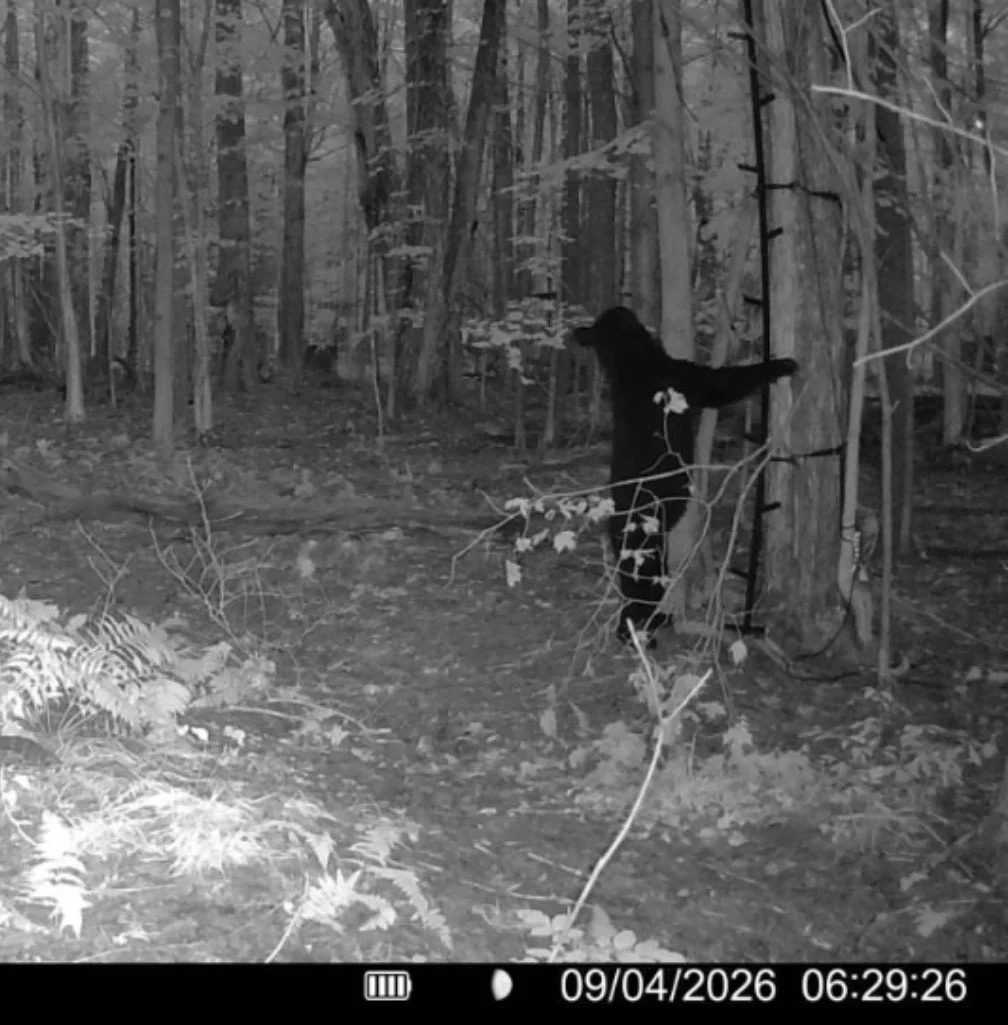
The pictures made me laugh, but they also got me thinking about something we probably don’t pay enough attention to this time of year. What I am seeing right now is September information, not October information. There is a difference. It is easy to get a daylight picture of a bear a few weeks before season and convince yourself you have him figured out. I have been hunting long enough to know better than that. What a bear is doing today only matters on October 1 if the reason he is doing it still exists. That is the part I want to figure out over the next few weeks. I know this bear was at my stand early in the morning. I know he was comfortable enough there to hang around, investigate the rope and climb the tree. What I don’t know yet is where he came from, where he went afterward or what brought him through that location in the first place. Those questions are more important to me than the pictures themselves.
Bears can make this especially difficult because so much of their movement revolves around food. September can offer them one thing and October can offer them something completely different. Apples, acorns, agricultural crops and whatever else is available can change how bears use a property in a relatively short amount of time. That means I don’t necessarily want to hunt where I saw a bear a month ago. I want to hunt the reason he was there and determine whether that reason still exists when the season opens. If a food source dries up or something better becomes available somewhere else, the bear has no reason to keep following the same routine just because my tree stand happens to be there. I think that is where hunters can get themselves into trouble with trail cameras. We can become so focused on the animal in the picture that we stop looking at everything around him.
That is why these next few weeks matter. One picture gives me a location and a time. Repeated pictures begin giving me a pattern. If I start seeing this bear coming from the same direction several mornings in a row, I can begin asking where he is coming from. If he appears shortly before dark and continually travels the opposite direction, I might be able to work backward and figure out where he is spending his daylight hours. If multiple bears begin using the same route, that tells me even more. Now I may not simply be watching one bear's personal routine. I could be looking at a travel corridor that connects something those bears want with somewhere they feel secure. That is the information I want before I ever climb into the stand. A trail camera is good at telling us where an animal was. Hunting still requires us to figure out why.
There is another part of those pictures that I found interesting. We spend an incredible amount of time worrying about everything we touch in the woods. We spray our boots, wash our clothes, watch our entry routes and try to leave as little human odor as possible. I believe in being careful with all of that, but then I get pictures of a black bear standing on his hind legs with my hoist rope between his paws. He didn't just smell something unfamiliar and leave. He investigated it and eventually started climbing the tree. I don't take that to mean bears don't care about human scent. I think it shows that their reaction to something unfamiliar isn't always as simple as we sometimes make it. Curiosity is part of their behavior too. What matters to me now is what happens afterward. If he comes back and uses the same area again, I know my equipment didn't make him abandon it. If his behavior changes, that is information too.
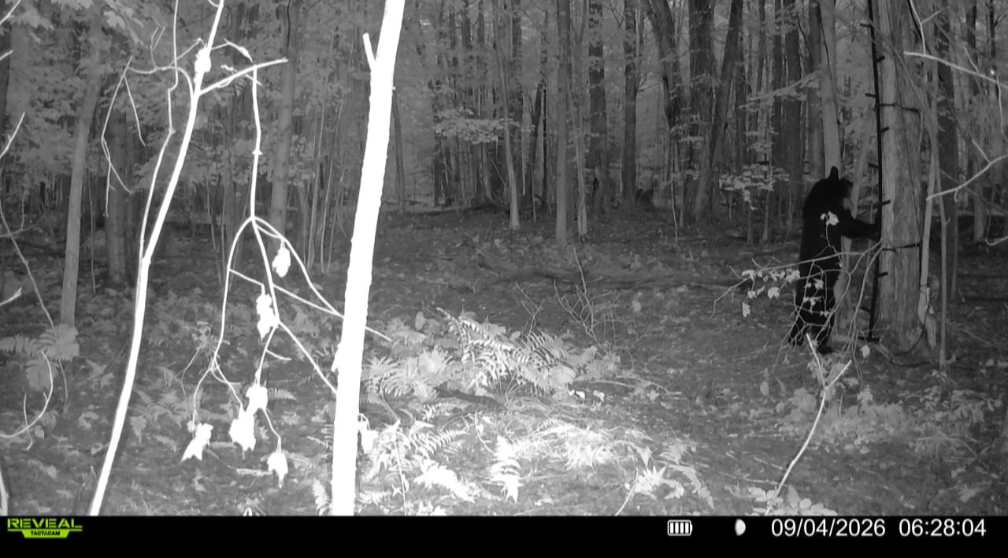
The temptation now is to go back in there and investigate everything myself. I want to look around the base of the tree, check the rope, make sure nothing was damaged and see if I can find exactly where he approached from. I could move another camera in, check for tracks and probably convince myself that I was doing all of it in the name of scouting. The problem is that at some point scouting stops helping and starts becoming intrusion. I already know a bear is using the area. My stand is already there and my camera is already doing exactly what I put it there to do. Walking back into the location every few days because I want more information could end up changing the very behavior I am trying to understand. Sometimes the hardest thing to do before a season is also the smartest thing to do. Leave it alone and let the animals show you what they are doing.
As September progresses, I will be watching more than just whether this particular bear shows up again. I want to watch the entire area. Are other bears appearing? Are the times changing? Does daylight movement increase or decrease? Are they approaching from a different direction? What food is available when those changes happen? Those are the little pieces that can turn random trail camera pictures into something useful. If I have a bear showing up regularly but suddenly he disappears, I don't automatically assume he's gone. I start looking for what changed. Maybe a food source somewhere else became more attractive. Maybe something disturbed the area. Maybe he shifted his travel just enough to miss the camera. That is where woodsmanship still matters no matter how much technology we have. The camera provides evidence, but it doesn't explain it.
I also think September is a good time to remind ourselves that we don't have to know everything before we hunt. Sometimes I catch myself trying to solve the entire puzzle before opening morning. I want to know where the bear beds, where he eats, which trail he takes, what time he will arrive and which wind will put him in front of me. It would certainly make things easier if bears cooperated with that plan, but they don't. The goal isn't to predict every move. The goal is to understand enough about what an animal is doing to put the odds a little more in our favor. If I can determine that this bear is repeatedly using this location because it connects security cover with a food source, that means a lot more to me than knowing he happened to be there at 6:28 on one September morning.
By the time October 1 arrives, I may have a completely different picture of this location than I do today. Maybe the bear will continue using it and those September pictures will turn into a pattern that carries right into opening day. Maybe several other bears will begin showing up and make the location even better than I thought. There is also a very real possibility that the camera goes quiet and I have to rethink everything. None of those outcomes would make the September pictures useless. They are simply the first pieces of information in a story that hasn't finished developing yet. That is part of what keeps me interested in hunting after all these years. We are constantly trying to understand animals that don't know or care about the plans we have made for them.
For now, I have a bear that apparently knows my setup pretty well. He has found my tree, played with my hoist rope and even climbed toward the stand where I hope to be sitting once the season opens. It makes for some great pictures, but I am trying not to let the pictures convince me that I already know how this ends. There are still several weeks between September 4 and October 1, and a lot can change in the bear woods during that time. My job now is to watch those changes, stay out when I don't need to be there and figure out whether this bear is giving me a real pattern or simply a good story.
Maybe he will still be there when October arrives and maybe he won't. That's the part I can't write yet. What I can do is pay attention to everything that happens between now and then, because opening morning success isn't always created on opening morning. Sometimes it starts weeks earlier with one trail camera picture that makes you look a little closer. In my case, it happened to be a bear standing against my tree with my hoist rope in his paws, apparently wondering what I had been doing in his woods. By October 1, I hope I know a little more about what he has been doing in mine.