
The Space Between the Strings
Written by: Ryan Reading, Fall Obsession Pro Staff
If you have been around bowhunting long enough, you have probably heard the argument. Sometimes it turns into an actual argument and sometimes it is just a comment made at camp. Someone mentions a crossbow and eventually somebody says, “That isn't bowhunting.” I have probably thought the same thing at different points in my life, and I think a lot of longtime bowhunters would admit they have too.
I have been a bowhunter for most of my life. I love shooting a bow and I love everything that comes with trying to kill a deer with one. Having to draw without getting busted, finding that small opening through the trees, settling the pin and trying to keep yourself together when a good buck is standing twenty yards away is part of what makes bowhunting what it is. That is the kind of hunting I grew up doing, and I don't think anything is ever going to replace it for me.
As I have gotten older, though, I have started looking at some things differently. Recently my eyesight has diminished some. I can still hunt, but I started having more difficulty with something I had done for years without thinking much about it. Eventually I had to ask myself a pretty simple question. Am I going to keep forcing myself to use a piece of equipment because that is what I have always used, even when I am struggling to see as clearly as I once did, or am I going to give myself another option that allows me to make the best and most ethical shot possible? I have no intention of putting my bow away. I will still carry it and hunt with it whenever I feel comfortable doing so because that is still how I love to hunt. Buying a crossbow wasn't about replacing my bow. It was about having something available that may help me when my eyesight makes using my bow more difficult.
I'll admit that even saying I bought a crossbow felt a little strange at first. I have always considered myself a bowhunter, so I started thinking about why buying one should somehow change that. The equipment in my hands may be different, but everything that happens before the shot is still hunting. I still have to read the sign, understand the wind and thermals, know where deer are bedding, figure out how they are traveling and put myself in the right place without getting detected. I still want that deer close, and I still have to make the right decision when the opportunity finally comes. More than three decades of experience in the woods doesn't disappear because I decided to carry a crossbow. The weapon may change how the shot is made, but it doesn't replace everything it takes to get to that shot.
That got me thinking about how we treat crossbow hunters in general. There is definitely a divide between the two groups. I have heard crossbows called cheating, an unfair advantage and even a gun with a string on it. Some bowhunters don't believe they belong in archery season at all. I understand some of that resistance because a crossbow and a compound bow are not the same thing, and I don't think we need to pretend they are.
There are different challenges involved with each. Where I think we get off track is when those differences become the reason we decide who deserves to be considered a bowhunter or who deserves our respect as a hunter. We can recognize that the two methods are different without turning that difference into a reason to look down on each other.
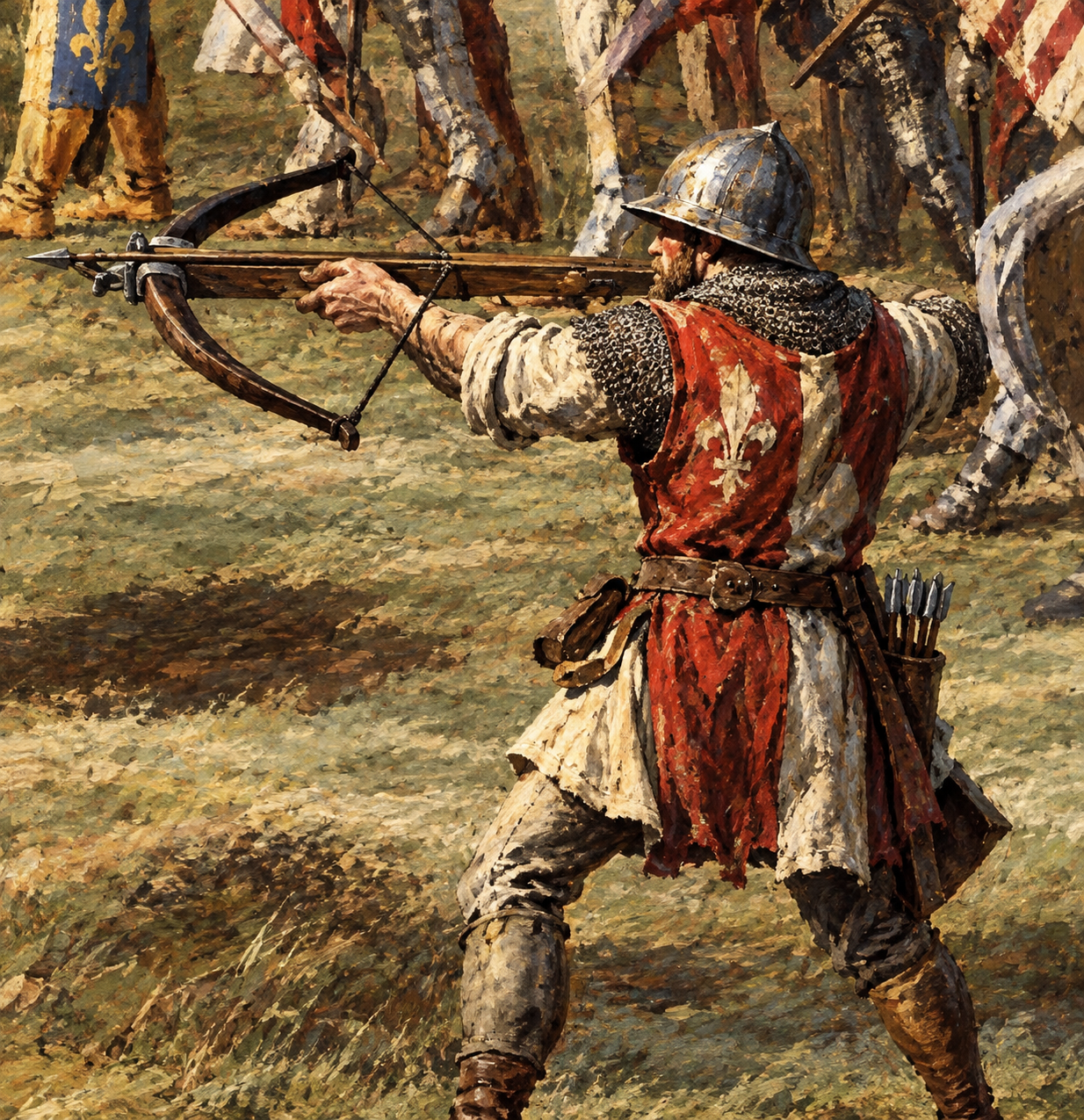
What is interesting about this argument is that the crossbow isn't some new invention that suddenly appeared in modern hunting. Encyclopedia Britannica describes the crossbow as one of the leading missile weapons of the Middle Ages. In its basic form, it consisted of a short bow mounted across a stock, with a mechanism that held the string and a trigger that released a bolt. Britannica traces its appearance in Europe to at least the 10th and 11th centuries. By 1139, it had become significant enough that the Second Lateran Council prohibited its use in certain warfare against Christians. We are arguing today about a weapon with roughly a thousand years of documented European history.
Obviously, today's crossbow is nothing like the one somebody carried during the Middle Ages, but neither is the compound bow hanging in most of our garages. When I started bowhunting, we didn't have half of what we have today. I remember shooting a bow with my fingers. We didn't have the sights, rangefinders, arrows, broadheads and other technology that we take for granted now. Today we can range a deer to the exact yard, use bright fiber optic pins, shoot incredibly consistent carbon arrows and use mechanical releases. Technology has been changing bowhunting for a long time.
That doesn't mean a compound and a crossbow suddenly become the same thing. They aren't, and they don't need to be. It also doesn't mean there shouldn't be discussions about technology, fair chase or where certain equipment belongs within hunting seasons. Those are legitimate conversations. What I have started questioning is why disagreement over equipment so often becomes a judgment of the hunter carrying it.
There is another part of this that becomes a lot more real as we get older. Not everybody carrying a crossbow chose one because they wanted something easier. Shoulder surgeries, arthritis, back problems, injuries, loss of strength, eyesight and age can change what somebody is physically capable of doing. A hunter might spend forty years carrying a compound and then reach a point where he simply cannot comfortably or safely pull it back anymore. Did he stop being a bowhunter that day?
Everything that hunter learned over those forty years is still there. He still understands deer movement. He still watches the wind. He still knows the difference between walking into an area and actually hunting his way into it. He still gets excited when he hears leaves crunch behind his stand. The only thing that changed is the equipment allowing him to continue doing something he has probably loved for most of his life.
I understand that better now because I am starting to experience a small piece of it myself. My eyesight changing doesn't mean I suddenly want an easier hunt. I would rather make an adjustment that allows me to hunt confidently and make an ethical shot than let pride determine what I carry into the woods. I still plan on hunting with my compound. The crossbow simply gives me another option when I need it, and I imagine there are a lot of hunters who eventually find themselves making that same decision for one reason or another.
At the same time, I don't believe somebody should need an ailment to justify using a crossbow. Physical limitations are one reason they are important, but they aren't the only acceptable reason to carry one. If crossbows are legal where somebody hunts and that person enjoys using one, follows the regulations, respects the animal and takes responsible shots, I don't think he owes the rest of us an explanation.
A crossbow also doesn't replace the hunt itself. It can't tell you where a mature buck beds. It can't fix a bad wind, choose the right tree or keep you from pushing into an area when you should have stayed out. It can't make a deer walk within range and it can't make the decisions that come before and after the shot. Scouting, woodsmanship, patience, understanding the animal and knowing when not to take a shot still belong to the hunter.
Maybe that is what gets lost when this argument becomes about which weapon is harder to use. We don't have to prove that a crossbow is as difficult as a compound to respect the person carrying it. We can acknowledge the differences and still realize that there is a lot more to hunting than the few seconds when an arrow leaves the string.
I also understand why bowhunters are protective of bow season. I am one of them. There is something special about close range hunting, and conversations about technology and effective range are worth having. We should be able to disagree about regulations and what equipment belongs in a particular season. There is a big difference, though, between disagreeing with a regulation and deciding that another hunter doesn't belong because of the legal equipment he chooses to use.
Hunting already has enough challenges without us finding more reasons to separate ourselves. We argue traditional bow versus compound, compound versus crossbow, public land versus private land and one hunting method against another. If we keep narrowing the definition of what a real hunter is, eventually we are going to spend more time fighting among ourselves than protecting the thing we all claim to care about.
I will still pick up my compound whenever I am comfortable doing it. There is a feeling that comes with drawing a bow on a deer at close range that I don't expect another piece of equipment to replace, and I don't need it to. Owning a crossbow hasn't changed what bowhunting means to me. What it has changed is how quickly I am willing to judge the person sitting in another tree with one.
There will probably always be bowhunters who don't like crossbows, and that is okay. Nobody has to change what bowhunting means to them, and we don't all have to agree about where crossbows belong within hunting seasons. Bridging this gap isn't about convincing everyone that a compound and a crossbow are the same. They aren't. It is about understanding that the person carrying one probably isn't as different from us as we have convinced ourselves he is.
I have spent most of my life as a bowhunter, and I still consider myself one today. This season there may be days when I carry my compound and there may be days when a crossbow is in my hands. Either way, I am still going into the woods for the same reason.
Maybe instead of worrying so much about which direction another hunter's limbs are facing, we should be a little more concerned with keeping hunters in the woods in the first place.