
Big Moments from Little Things
Written by: Ryan Reading, Fall Obsession Pro Staff
Every hunter dreams about the big things. The giant buck stepping into an opening, the heavy rack moving through the timber, the trail camera picture that makes you stop whatever you are doing and stare at your phone, or the blood trail that finally ends with your hands wrapped around a set of antlers you have spent months and sometimes years thinking about. Those are the moments we remember. They are the pictures we share and the stories we tell. But after spending most of my life chasing whitetails, I have learned that those big moments are rarely created by one big decision. They are usually created by a hundred little ones, and most of the time you don't even realize how important those little things are until everything finally comes together.
Sometimes it is a wind that changes slightly. Maybe it is a new track in the mud that wasn't there yesterday, a doe looking behind her a little more than normal, a buck showing up ten minutes later each evening, or a trail that suddenly isn't being used the way it was a week ago. Individually, none of those things might seem very important, but when you start putting them together they can tell you a lot. That is probably one of the biggest things the woods have taught me over the years. Mature deer don't usually hand you the entire answer. They give you pieces of it, and it is up to you to pay attention and try to figure out what those pieces are telling you.
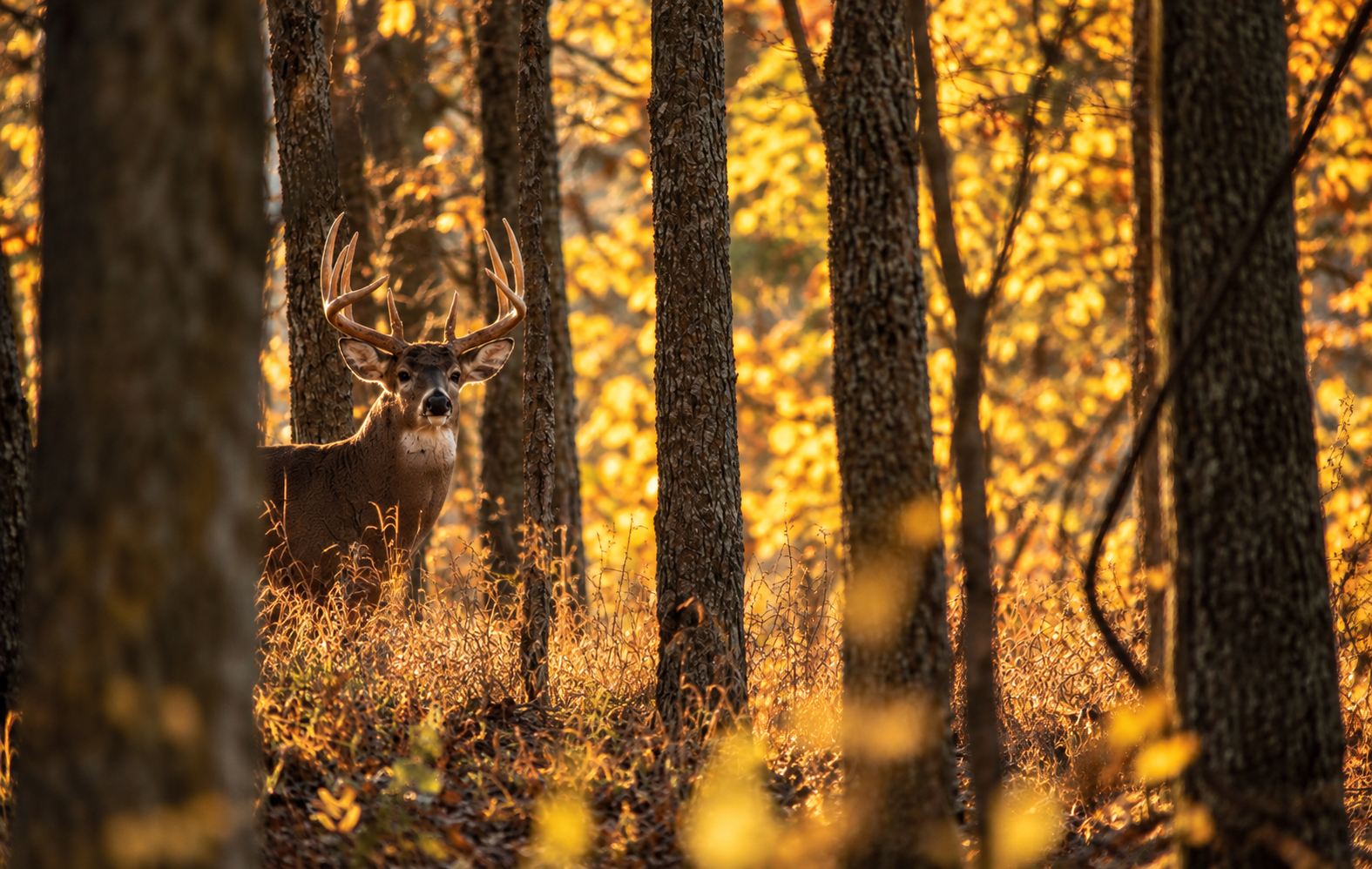
Years ago I probably thought finding the right spot was most of the battle. Find the food, find the trails, hang a stand and wait. There is still some truth to that, but over the years I have realized how much can change within twenty or thirty yards. I have hunted places where several trails come together and everything about that location looks perfect. Your first thought is to get right in the middle of it, but sometimes that is exactly where you shouldn't be. A slight change in elevation might carry your scent differently. A creek bottom might pull it in a direction you weren't expecting, or the deer might be approaching that intersection from so many directions that you can't hunt it without eventually getting caught. Moving twenty yards doesn't sound like much, but when you are bowhunting twenty yards can be the difference between watching a mature buck and actually getting an opportunity at him.
The same thing goes for getting into your stand. As I have gotten older and learned more, I have probably become more particular about how I get into a stand than I used to be about where I actually put it. A great stand with terrible access isn't always a great stand. Sometimes the best route is the longest route. I would rather walk several hundred extra yards than cross a trail I expect a mature buck to use that evening. I will use creeks, ditches, hills, standing crops, darkness and whatever else the property gives me. There have been plenty of times when I have stood behind a tree waiting for deer to move or completely changed how I was getting into an area because something wasn't right. Nobody sees that part of the hunt and nobody takes a picture of the extra distance you walked, but sometimes those little decisions are exactly why the hunt works out.
Wind is another one of those things I have learned not to take for granted. A weather app can tell me the wind is southwest all day long, but what is happening twenty feet up a tree or down in a creek bottom can be completely different. Terrain does strange things with air. Hills redirect it, bottoms pull it and the thermals can change as the morning warms or the evening cools. You can hunt a stand for years and then one day watch your scent travel somewhere you never expected it to go. I remember things like that. I might not have seen a deer that day, but I learned something about that spot, and sometimes years later you find yourself making a decision because of something the woods showed you on a hunt that at the time seemed completely uneventful.
Trail cameras have taught me some of the same lessons. I run a lot of cameras and I depend on them for information, but I have also learned that what isn't on a camera can sometimes be just as important as what is. A mature buck disappearing from a camera doesn't necessarily mean he left the area. Sometimes I think they simply learn. I have watched bucks change the way they approach cameras. I have seen them skirt one camera by thirty or forty yards and then appear on another. I have watched patterns change after I went into an area, and I have seen bucks that didn't seem bothered by a camera suddenly start avoiding it. If I only looked at the pictures I might assume that deer was gone, but the tracks, rubs, scrapes and behavior of the other deer might tell me something completely different. Cameras are a great tool, but they are still only one piece of what is happening in the woods.
One of the biggest things I pay attention to as October progresses isn't even the bucks. It is the does. For much of the month groups of does can seem fairly predictable, but every once in a while you start noticing something different. Maybe one doe starts showing up by herself. Maybe she starts bedding somewhere different or spends more time along a ridge or down in a bottom away from the rest of the group. Those are things I pay attention to, especially as October starts getting later. Sometimes those little changes are telling you that something is beginning to happen before you ever see a mature buck.
Then one evening a buck might suddenly cruise through an area where you haven't been getting pictures of him. He may not stay and you might not see him there again for several days. Years ago I might have looked at that as a random appearance, but I don't necessarily see it that way anymore. Bucks will start moving through areas and checking doe groups to see what is going on. That one picture or one sighting can be a small piece of a much bigger picture. Instead of only asking where the buck went, I have learned to ask why he was there in the first place. Why did he come from that direction? Why did those does suddenly change what they were doing? Why did that trail go cold? Why is a scrape being worked now when it wasn't touched two weeks ago? You won't always get the answer right. I certainly don't. Mature whitetails have made me look stupid plenty of times, but asking those questions has made me a better hunter.
Pressure is another little thing that isn't always as obvious as people think. When we hear hunting pressure we think about trucks parked along the road, hunters walking everywhere and stands being hunted every day. But pressure can be much smaller than that. Walking through the wrong area once can matter. Checking a camera at the wrong time can matter. Leaving your scent near a bedding area can matter. Bumping a doe that runs through the woods blowing can change an entire evening. Sometimes one of the hardest things for me to do when I know a good buck is in an area is simply leave it alone.
Everything inside you wants to go hunt him, especially when the pictures start coming in and you know he is there. Over time though, I have learned there is a difference between hunting a buck and hunting the opportunity to kill that buck. If the wind isn't right, sometimes I wait. If my access is going to put me in a bad position, sometimes I wait. If I don't feel like the conditions are giving me an advantage, I might give it another day. Every time I enter that deer's world I have an opportunity to learn something about him, but he also has an opportunity to learn something about me. With an older buck, I don't want to give him too many chances to do that.
All of those little things eventually lead to the moment we are waiting for. You spend months watching cameras, scouting, studying maps, hanging stands, watching the weather and trying to figure out a deer, and then suddenly he is standing there. Your heart is pounding and everything seems to happen a lot faster than it did in your head. That is another place where the little things matter. Instead of looking at the whole deer, pick the spot you want to hit. Make sure that little branch isn't in the way. Look at his angle. Watch his body language. Take that extra second if he gives it to you. We can spend months creating an opportunity and then lose it in a few seconds because we rushed the one part that mattered most.
After the shot, I think the little things become even more important. Where exactly did you hit him? How did he react? Did he hunch up? Did he kick? What direction did he run? Where was the last place you actually saw him instead of where you think you saw him? What did the arrow look like? What does the blood look like? Did you hear anything after he disappeared? Excitement makes us want to climb down and go find the deer, but experience has taught me that sometimes the best thing you can do after a shot is sit there and think about what just happened. Replay everything in your head and give that deer the time it deserves. One little detail you remember from those few seconds might completely change how you handle the recovery.
There is another side to all of this that I think I have started noticing more the longer I hunt. The little things aren't only what help us become better hunters or eventually put our hands on a mature buck. They are also a huge part of why we keep coming back. It is the smell of the woods on a cold October morning, hearing leaves crunch somewhere behind you before you can see anything, seeing your breath for the first time that fall, finding a fresh scrape that wasn't there yesterday or hearing a grunt somewhere out in the timber and trying to figure out how far away it came from.
It is watching the woods wake up in the morning and watching everything slowly settle down again at night. It is a fox slipping through without knowing you are there, squirrels making you turn your head twenty times because every one of them sounds like a deer, the first snow collecting on the branches around your stand, or sitting there after sunset knowing you should probably start climbing down but giving it another few minutes because you just aren't ready for the evening to be over. Those things don't make the highlight reel, but after all these years some of them mean just as much to me as the things that do.
We spend a lot of time measuring hunting by the big things. How many points does he have? What did he score? How far was the shot? What did he weigh? I love chasing big bucks as much as anybody. I have spent countless hours trying to find them, pattern them and understand why they do what they do. But some of my favorite memories in the woods don't have a score attached to them. They are little pieces of time that probably wouldn't mean anything to somebody who wasn't there, and maybe that is exactly why they mean so much to us.
More than thirty years in the woods haven't given me all the answers. If anything, they have probably shown me how many answers I still don't have. What those years have taught me is to pay attention. Pay attention to the wind, the tracks, the does, the terrain, the pressure, the changes and sometimes just that feeling you get when something isn't quite right. Then there are those rare evenings when everything does feel right. The wind is doing what you expected, you got into the stand without disturbing anything, the does are where you thought they would be and daylight slowly starts disappearing from the woods. Somewhere out in front of you there is a step in the leaves, then another, and eventually a piece of antler appears between two trees.
That is when all those little decisions suddenly don't seem so little anymore. We will remember the buck, the shot, the recovery and the picture for the rest of our lives, but there were probably a hundred small things that happened before that moment that nobody else will ever know about. The older I get and the more time I spend in the woods, the more I realize that might be what hunting has been trying to teach me all along. We spend our lives chasing the big moments, but more often than not, it is the little things that get us there.