
The Blueprint: A Hidden Science Behind a Buck's Velvet
Written by: Ryan Reading, Fall Obsession Pro Staff
Every summer, trail cameras begin capturing images that stop hunters in their tracks. Velvet covered bucks seem to appear almost overnight, carrying antlers that grow larger with each passing week. Conversations quickly turn to score, tine length, and whether a particular buck has reached his full potential. Most of us focus on the finished product, but very few stop to consider the incredible process taking place beneath the velvet itself.
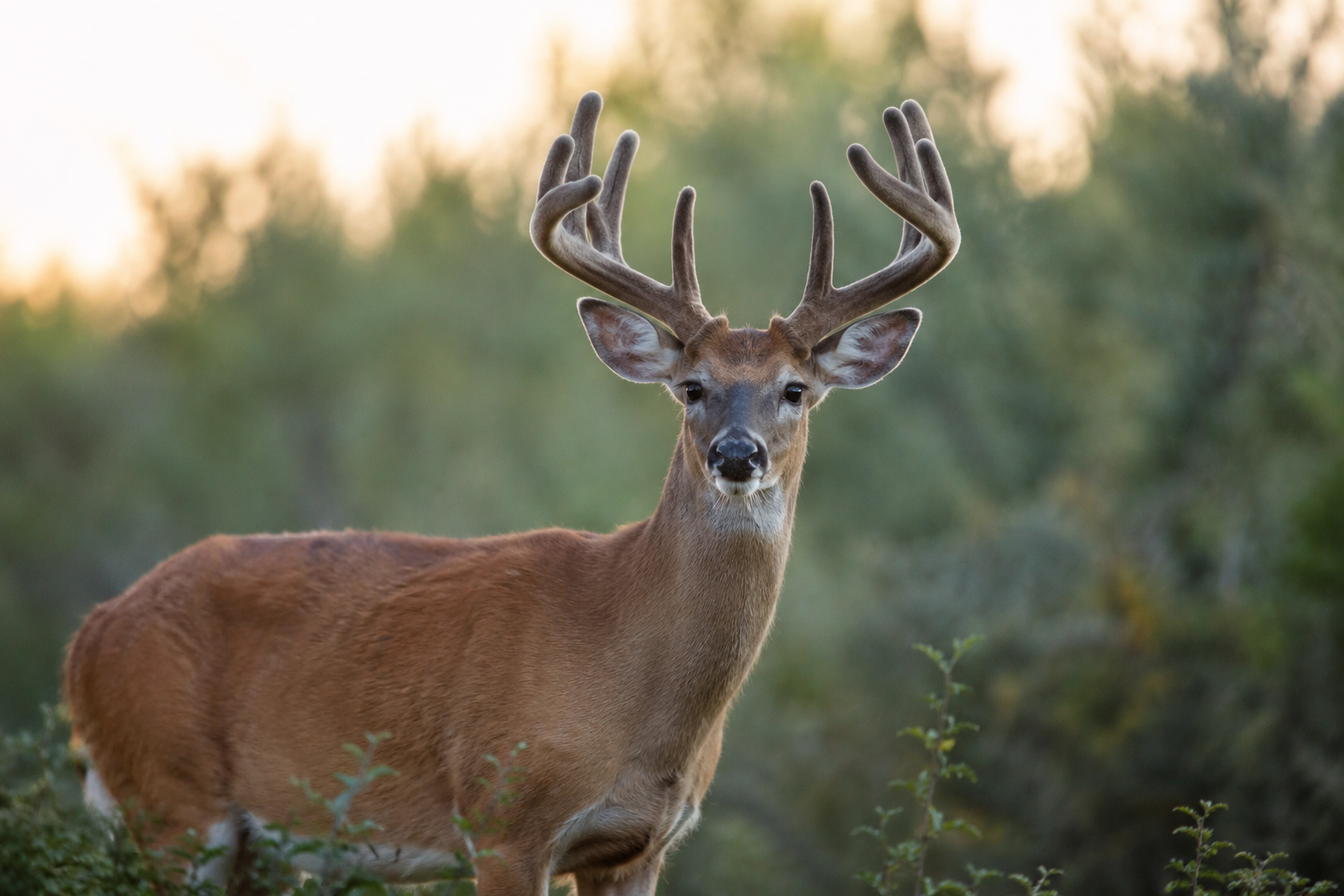
For many years hunters have viewed velvet as nothing more than a fuzzy covering that supplies blood to growing antlers. While that is certainly one of its jobs, modern research has shown that velvet is much more than a protective layer. It is living tissue that plays an active role in directing how an antler is formed. In many ways, the velvet is not simply feeding the antler. It is helping build it.
As antlers develop, the velvet contains an extensive network of blood vessels that deliver oxygen, nutrients, and minerals to support astonishing rates of growth. Hidden within that tissue are specialized cells that influence where bone is deposited, where new tines begin to emerge, how much mass is added, and when growth should continue or come to an end in different sections of the antler. Every curve of the main beam and every branching tine is the result of an organized biological process that is taking place throughout the summer.
This also explains why injuries to velvet can produce some of the unusual antlers that hunters occasionally encounter. A puncture from a stick, a tear from crossing a fence, or damage caused by an accident does not simply scar the outside of the velvet. If that injury interrupts the tissue while a portion of the antler is actively developing, the final rack can be permanently altered for that season. Extra points, split tines, palmation, drop tines, and other abnormal characteristics can all develop depending on when and where the injury occurred. The earlier the damage happens during the growing season, the greater the chance it will influence a larger portion of the finished antler.
As fascinating as the velvet itself may be, the story actually begins long before hunters ever notice antler growth.
Many people assume a buck begins growing antlers sometime in late spring. In reality, the process starts much earlier. After the previous set of antlers is shed, changing daylight begins altering hormone levels within the buck's body. Those hormonal changes activate stem cells located around the pedicle, the permanent structure on the skull where every new antler begins. At that point, the biological plan for the next rack is already being organized.
This is what many researchers refer to as the blueprint.
Long before the first visible inch of antler appears, those cells already contain the genetic instructions that will influence beam length, tine placement, symmetry, and the overall shape of the rack. It is remarkably similar to building a house. Before the first board is nailed into place, an architect has already completed the plans. The builders simply follow those plans throughout construction. In much the same way, the velvet follows the genetic instructions that have already been established, directing the formation of the antlers until growth is complete.
Of course, every blueprint has limitations. Genetics establish what is possible, but they do not guarantee the final result. Age, nutrition, habitat quality, disease, injuries, and overall health all influence how completely that blueprint is expressed. A buck with outstanding genetics living in poor habitat may never achieve his full potential. Another buck with average genetics but excellent nutrition may develop nearly everything his genetic blueprint allows. The blueprint provides the potential. The environment determines how much of that potential is realized.
This hidden process also helps explain why mature bucks often carry recognizable antlers from one year to the next. Hunters who spend enough time studying trail camera photos frequently identify the same buck before even looking at his body. The overall frame usually remains familiar. The beams follow similar paths, the tines rise from nearly the same locations, and the rack maintains its unique character. As the buck ages he may gain additional mass, longer tines, or even an extra point, but the underlying design often remains remarkably consistent because the same biological blueprint is being followed year after year.
When you stop to think about it, the annual growth of antlers is one of the most extraordinary events found anywhere in the natural world. Every year a buck sheds a complete set of antlers and then regenerates an entirely new one from scratch. Few mammals possess the ability to repeatedly regenerate such a large and complex structure. It is so remarkable that scientists continue studying antler development in hopes of learning more about tissue regeneration, bone growth, and even potential applications for human medicine.
As hunters, we spend countless hours studying velvet photographs while trying to predict what a buck may become by opening day. We estimate score, debate age, and dream about what that deer might look like in another month. Yet the most fascinating part of the story is often the one we never see.
Hidden beneath that soft layer of velvet is one of nature's greatest engineering projects. A carefully programmed genetic blueprint works together with living tissue to create a completely new set of antlers every single year. It is a process so precise and so complex that even today scientists continue uncovering new details about how it works.
The next time a velvet buck appears on your trail camera, take a moment to appreciate more than the inches of antler he is carrying. What you are looking at is not simply a rack in progress. You are witnessing one of the most remarkable examples of natural design found anywhere in the animal kingdom.