
The Genesis of Giants: Where the Crown Begins
Written by: Ryan Reading, Fall Obsession Pro Staff
Why do some years produce bigger bucks than others?
It is a question I have asked myself for years. Most hunters point to genetics, age, or hunting pressure, and they are not wrong. Those factors all play an important role. But I believe there is another piece of the puzzle that deserves far more attention.
Rain.
Not because rain grows antlers, but because it feeds the entire chain that does.
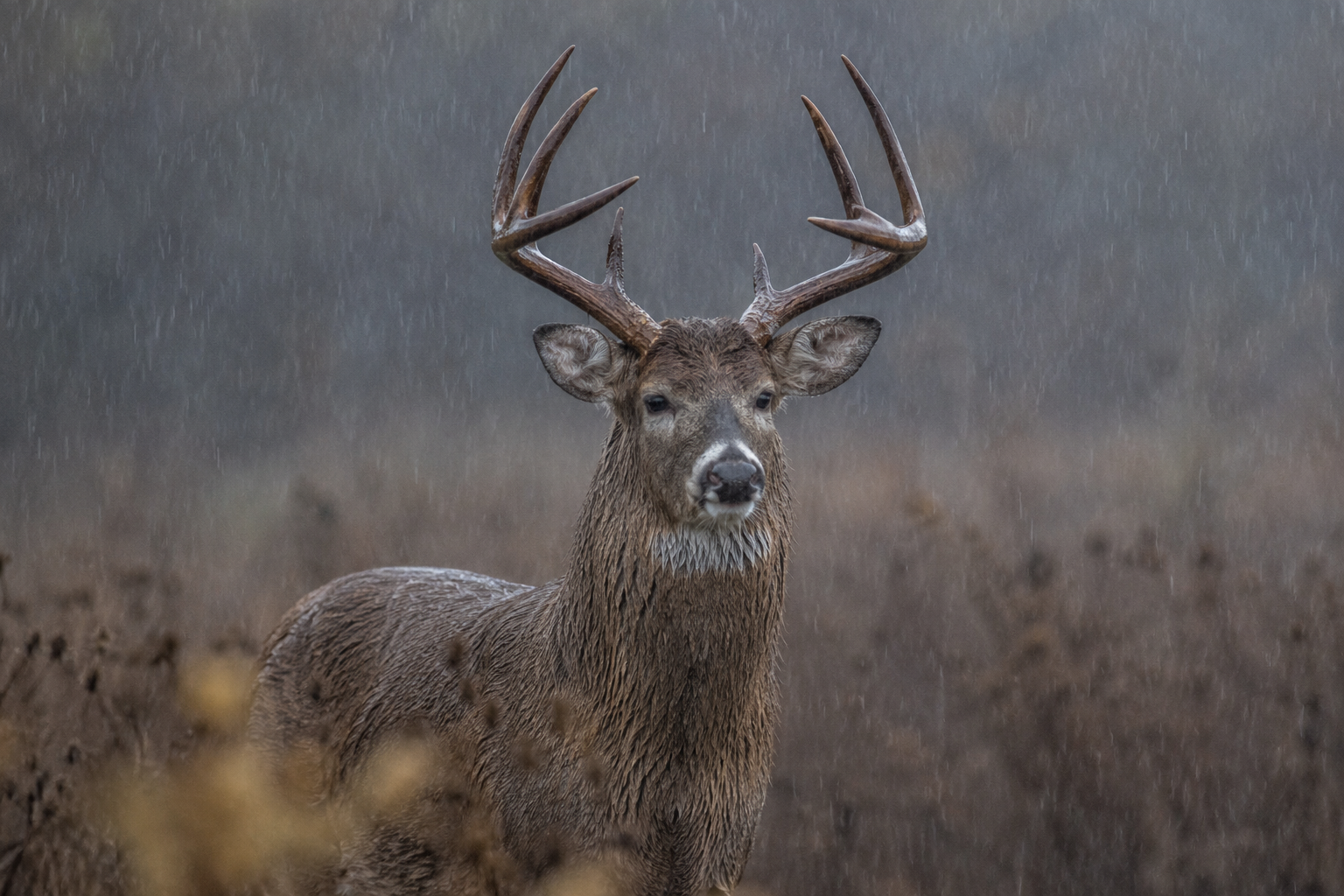
A spring rain does far more than fill ponds and green up fields. It replenishes the soil, encourages healthy plant growth, and helps make nutrients available to the vegetation that whitetails depend on every day. As those plants grow, they absorb water along with nutrients such as calcium, phosphorus, magnesium, potassium, sulfur, zinc, copper, manganese, and dozens of other trace elements from the soil. Those nutrients become part of every clover leaf, every soybean plant, every tender shoot, every acorn seedling, and every patch of natural browse a buck consumes throughout the summer.
A buck builds his antlers one bite at a time. Every mouthful he takes is another load of protein, carbohydrates, minerals, vitamins, and water entering his body. Those nutrients are used to maintain muscle, repair tissue, fuel his daily activity, and during the spring and summer, help support one of the fastest growing bone structures found anywhere in the animal kingdom.
Most hunters think antlers begin on a buck's head. I believe they begin in the soil.
Healthy soil is far more than dirt. It is a living ecosystem filled with bacteria, fungi, earthworms, insects, and microorganisms working around the clock. When adequate rainfall arrives, that underground world becomes incredibly active. Organic matter breaks down, nutrients become more available to plant roots, and vegetation responds with vigorous growth. Instead of struggling to survive, plants thrive.
That matters because a healthy plant is much more than something a deer eats. It is a storage system for everything the soil provides. As roots absorb nutrients from the earth, those nutrients are moved into the stems and leaves where deer consume them. Every bite becomes another opportunity for a buck to gather the building blocks needed for antler development.
Protein is often the first thing hunters think about, and for good reason. Growing antlers requires tremendous amounts of it. But protein is only part of the story. Calcium and phosphorus provide much of the structure found within antlers. Magnesium plays an important role in bone formation. Trace minerals such as zinc, copper, and manganese contribute to healthy growth and development. Water itself is equally important because every biological process inside a buck's body depends on it.
Rain helps keep that entire nutritional pipeline moving.
During dry years, the landscape changes quickly. Grasses become dormant. Clover burns off. Woodland browse hardens. Many plants stop producing fresh growth weeks earlier than normal. Deer can still find food, but the quality and abundance of that food often decline. Bucks must spend more time feeding and more energy searching for the nutrition they need during the very months when their bodies are trying to grow antlers at an incredible rate.
When rainfall is steady throughout the spring and early summer, the opposite often happens. Fields stay green. Native browse remains tender. Food plots continue producing fresh growth. Agricultural crops flourish. The buffet stays open longer, allowing bucks to consume quality forage throughout the majority of the antler growing season.
That does not mean every wet year produces a Boone and Crockett buck. Genetics still determine a buck's ceiling. Age is still essential. Habitat quality, deer density, disease, stress, and countless other factors all play important roles. But when those pieces are already in place, abundant rainfall may allow a mature buck to express more of the genetic potential he already carries.
Over the past several years, I have run more than thirty trail cameras across Western New York on agricultural land, private farms, timber, and public ground. One thing continues to catch my attention. The summers that stay green the longest often seem to produce some of the healthiest deer I photograph. Their bodies appear fuller. Their coats shine. Their velvet antlers seem heavier and more complete as summer progresses.
Is rainfall the only reason? Of course not. But I no longer believe it is simply a coincidence either.
The next time a slow spring rain falls across the woods, do not think of muddy boots or washed out food plots. Think about what is happening beneath your feet. Think about millions of plant roots pulling nutrients from the soil. Think about clover pushing new leaves. Think about soybeans reaching a little higher toward the sun. Think about every bite a buck will take over the coming months. Because long before you ever hang a trail camera or climb into a tree stand, nature has already begun building the crown.
The genesis of giants has never started with antlers. It has always started with the rain.