
The Last Dance: Do Mature Bucks Have One Final Rut?
Written by: Ryan Reading, Fall Obsession Pro Staff
Every deer hunter has heard the story. A giant buck that nobody has ever seen suddenly appears during the rut. Trail cameras that were quiet all summer suddenly capture him in daylight. Hunters catch brief glimpses of a massive rack crossing a field, pushing does through timber, or cruising a ridge that seemed lifeless just days before. Then, almost as quickly as he appeared, he vanishes. Sometimes he's harvested. Sometimes he sheds his antlers unusually early. Sometimes he is simply never seen again.
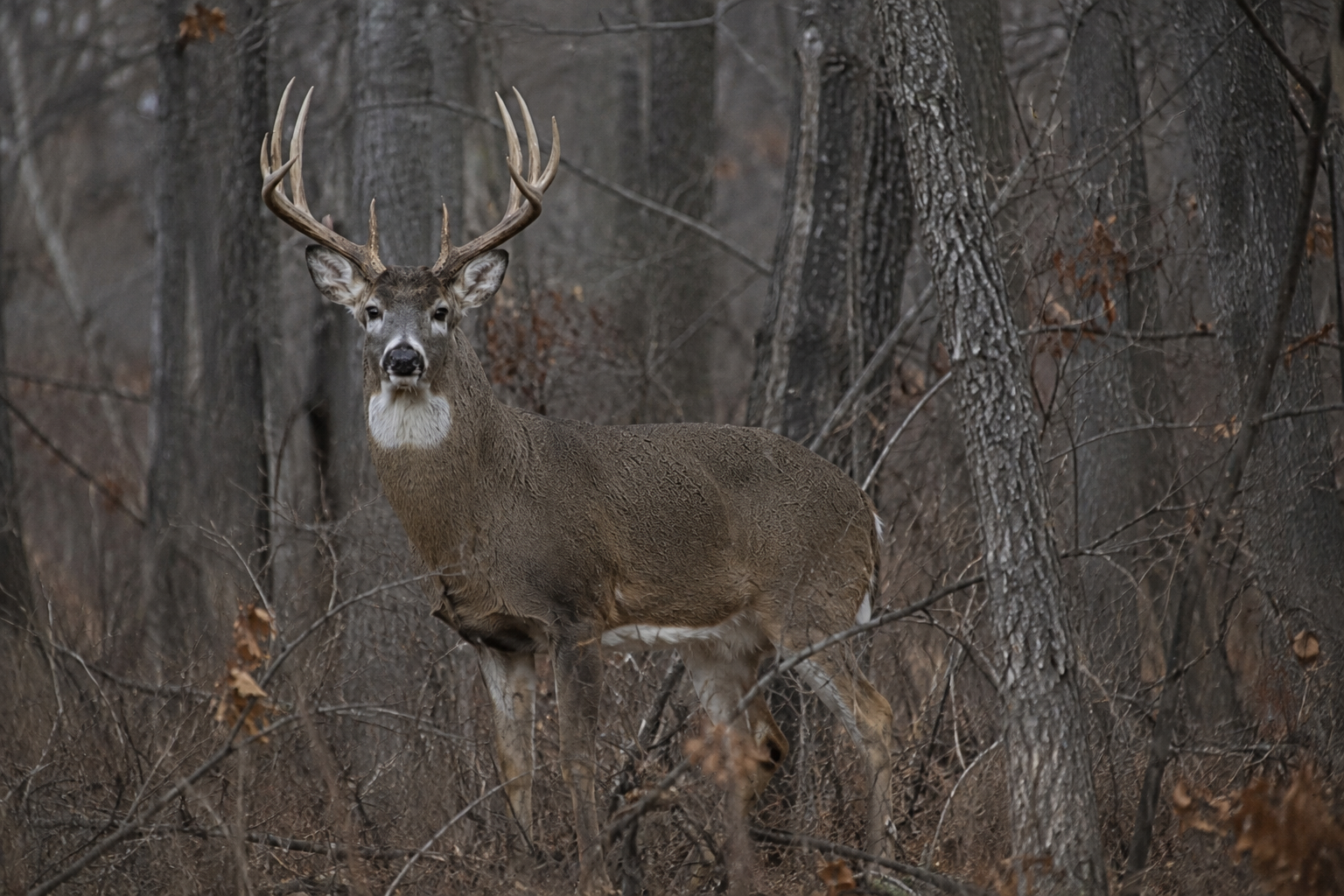
After years of running trail cameras and studying mature whitetails, I've often wondered if there is more happening than coincidence. Is it possible that some old bucks know, in a biological sense, that this may be their final breeding season? Are they simply worn down by age, or do they invest everything they have left into one final opportunity to pass on their genetics?
Over the years, I've watched several mature bucks that fit this pattern almost perfectly. They spend the summer and early fall behaving exactly like you'd expect an old buck to behave. They're cautious, calculated, and nearly invisible. Then the rut arrives, and it's almost like someone flipped a switch. They seem to rut harder than every other buck on the property. They cover more ground, chase does relentlessly, fight every rival they encounter, and begin showing up in places they had avoided for months.
Then something else happens that I've found equally interesting. Some of those same bucks drop their antlers surprisingly early, sometimes in December while other mature bucks are still carrying theirs well into winter. By the following season, many of them are simply gone. Hunters often assume they were harvested, and undoubtedly some were. But after seeing this pattern repeat itself enough times, I can't help but ask if there is more to the story.
This is where my mind keeps coming back to the same question. Could an old buck, not consciously but biologically, be driven to invest everything he has left into reproduction as his opportunities naturally decline with age? Obviously, he doesn't know it's his last rut the way a human understands mortality. But could his body? Could aging bucks be programmed to travel farther, fight harder, breed longer, and pour every remaining ounce of energy into passing on their genetics because another breeding season is no longer guaranteed? If reproduction is nature's ultimate objective, perhaps an old buck's greatest breeding effort doesn't happen in the prime of his life. Perhaps it happens near the very end.
Maybe that's why some of the oldest bucks seem almost possessed during the rut. They suddenly abandon months of caution, cover incredible distances, chase nearly every receptive doe they encounter, and continue long after younger bucks begin slowing down. Their entire focus becomes breeding. Then, only weeks later, some cast their antlers unusually early or simply disappear forever. Is that merely coincidence, or are we witnessing a biological strategy that has largely gone unnoticed?
Science has shown that mature bucks can lose twenty to thirty percent of their body weight during the rut. Weeks of constant travel, fighting, breeding, and very little feeding take an enormous physical toll. A younger buck has a better chance of recovering from that punishment. An old warrior carrying years of injuries, worn teeth, declining body condition, and several hard winters behind him may not.
Early antler casting may provide another clue. Antler retention is closely tied to testosterone, and severe physical stress, poor body condition, injury, or disease can cause testosterone to decline sooner than normal. When that happens, bucks may shed weeks earlier than expected. Perhaps that early antler drop is not the cause of their decline at all. Perhaps it is simply one of the first visible signs that their body has already been pushed beyond its limits.
Maybe there isn't a direct correlation at all. Maybe every one of those bucks was harvested somewhere I never knew about. Maybe winter, disease, injury, or predators eventually caught up with them. There are countless explanations, and without following individual bucks from birth until death, we may never know the complete answer.
But after watching enough mature bucks over the years, I've learned not to dismiss patterns simply because they haven't been scientifically explained. Some of the greatest discoveries in wildlife biology began with someone noticing something that didn't quite fit conventional thinking. This is one of those observations that continues to stay in the back of my mind every November.
The next time you watch an old warrior relentlessly pushing does across a hillside, fighting every buck that challenges him, or suddenly appearing on trail cameras after months of silence, ask yourself this. Are you simply watching another mature buck doing what mature bucks do? Or are you witnessing the greatest reproductive effort of a deer whose biological clock is quietly telling his body that time is running short?
I don't know the answer. Maybe none of us do. But the more mature bucks I follow over multiple seasons, the more this question keeps resurfacing.
Perhaps it's nothing more than coincidence. Or perhaps every once in a while, we're fortunate enough to witness an old buck's greatest effort to leave his mark on the whitetail woods before his story comes to an end.